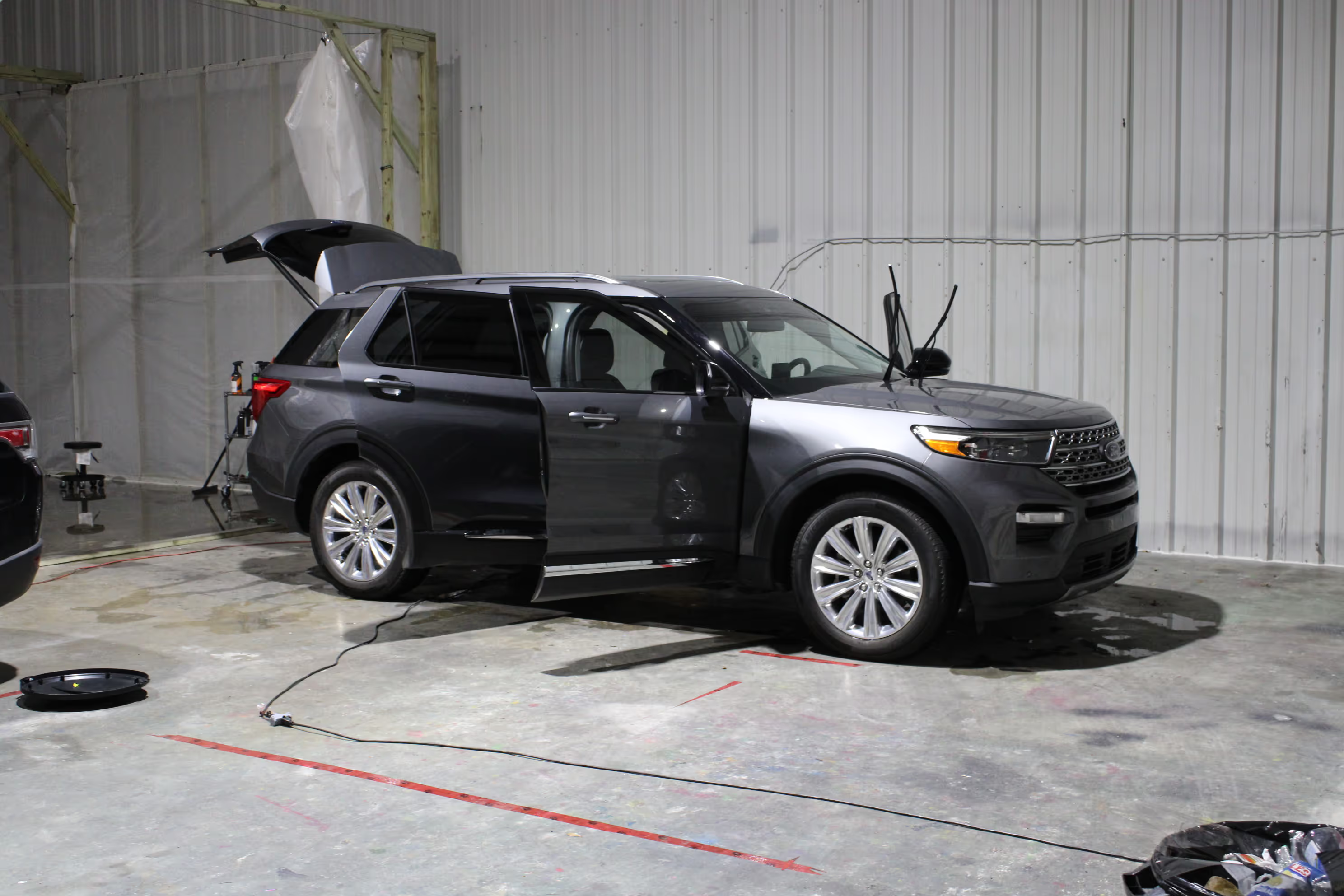
ODOR REMEDIATION SERVICE -
What is odor removal, and why is professional remediation so important?
Odor remediation is the full process of physically removing and chemically breaking down odorous molecules and embedded smells. Most "odor removal" services rely on basic, single-pass cleaning, masking sprays, or worse, ozone generators, to remove deeply embedded and stubborn odors. Unfortunately, none of that addresses the actual odor source: typically deep within the carpet, fabric, ventilation system, and porous plastics of a vehicle's interior.
Our odor remediation process is built around real chemistry — physical removal first, oxidation second, and a permanent neutralization step at the end. It's a standards-based approach seen in professional home & commercial industries where regulations and laws exist — something not found in the detailing space — but we apply it to every vehicle that comes through our shop.
At Acadiana Detailing, odor remediation starts at $500 for a small sedan and scales with vehicle size, odor type, and general severity. Reach out directly if you'd like to get a quote!
ODOR REMOVAL SERVICE -
The Real Deodorization Chemistry, and Why "Masking" Fails
We've spoken about how most products "mask" odors instead of eliminate them, but what does that actually mean? To understand masking, we first have to understand what it isn't — so let's look at what an effective deodorizer actually does:
- Physical removal - this is most similar to our initial cleaning process (see below for our process outline). Some deodorizers and cleaners work by forcing the odor molecules to release from the surface they're attached to (think porous plastics, carpets), making them easy to extract or wipe away. They do not destroy the actual molecule, but allow it to be removed more easily.
- Chemical decomposition - some deodorizers work by chemically decomposing odors. Think of how hydrogen peroxide reacts and breaks down organic material — these deodorizers work in a similar fashion. These are known as "oxidizers" and come in many different forms. They differ from the cleaning step in that they work on odor molecules that can't be physically removed.
What these methods share is that they all act on the actual odor molecules — modifying, breaking down, or removing them. A mask doesn't do any of that. When you use something like Febreze, it lays fragrance molecules onto the surface alongside the malodor molecules. The two are now fighting for space, and Febreze's fragrances (a) don't chemically affect the odor molecules, so you can still smell them, and (b) aren't strong or stable enough to outcompete old, rotten smells. It might smell good for the first week, but beyond that, the fragrance breaks down and the smell "returns" — but it never really left.
HOW DOES IT WORK -
Our 3-Stage Odor Removal Process
Most odor removal fails because it skips a step, or a few. A single product can't do every job, and trying to deodorize a car before you've cleaned it is like spraying air freshener on your stinky garbage — we know that won't work. Our process handles each stage with the right chemistry and workflow to provide reliable, consistent, and effective results.
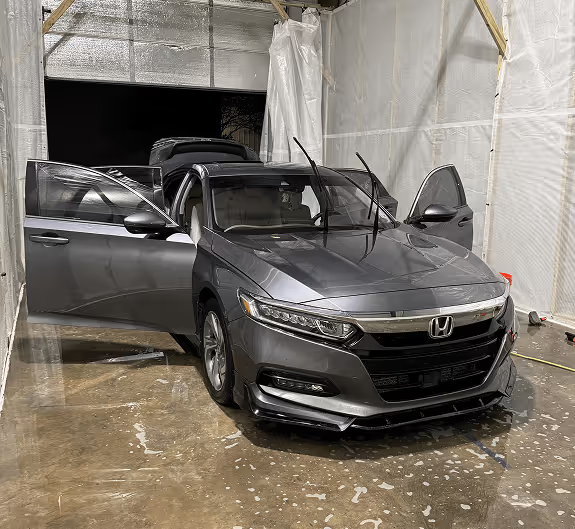
Stage 1 — Physical Cleaning (The Bulk Effort)
This is where half of the magic happens. The cleaning stage does the heavy lifting to remove deeply embedded tar, oils, proteins, and fats from carpets, fabrics, and plastics.
- Powerful cleaners on all hard surfaces. Plastics are porous by nature — meaning they absorb moisture and odors and, over time, can lock them in. Plastics also absorb odors even when they were never directly contaminated — that's why certain odors can still remain even after the problem area was cleaned or replaced.
- An effective targeted carpet shampoo is used alongside good cleaning practices to physically break down and remove embedded odors. A "targeted shampoo" may sound silly, but different odors require different chemicals to actually break them down. Urine odors respond best to enzymatic cleaners — but those same enzymatic cleaners do nothing for smoke, weed, or fat-based residues.
- Air vents, cracks, crevices, trim seams - all cared for equally. If even one small area is missed during the remediation process, it can be the source for odor return.
Stage 2 — Oxidation (Kill What's Left)
Cleaning is the bulk remover of tar, oils, dirt, and odor contamination — but a lot of residual gets left behind.
- Ventilation system fully cleaned and deodorized. The cabin air filter is replaced, even if it looks and smells clean. The HVAC system is then flushed with cleaner to remove heavy contamination and dirt that clogs your coils and causes odor, followed by a thorough deodorization treatment to kill any residuals.
- Overnight oxidizing treatment - both in liquid and gas form, applied simultaneously. These work in tandem to remove residual odors deep within plastics, fabric, and unreachable areas.
- Chemistry that breaks odor molecules apart - no masks, tricks, or strong fragrances that do nothing.
Stage 3 — Leave-In Protection
Our final step is a leave-in deodorizer that works in three ways:
- Molecular bonding - the treatment chemically attaches itself to the remaining odor molecules, and once attached, destroys them.
- Physical absorption - it passively pulls any old or new odor molecules out of the air, locks them in place, and absorbs them, chemically altering them so they no longer produce scent.
- Source-specific counteraction - different formulas are designed for different odor classes (smoke, urine, food, and so on), so the chemistry is matched to the specific situation.
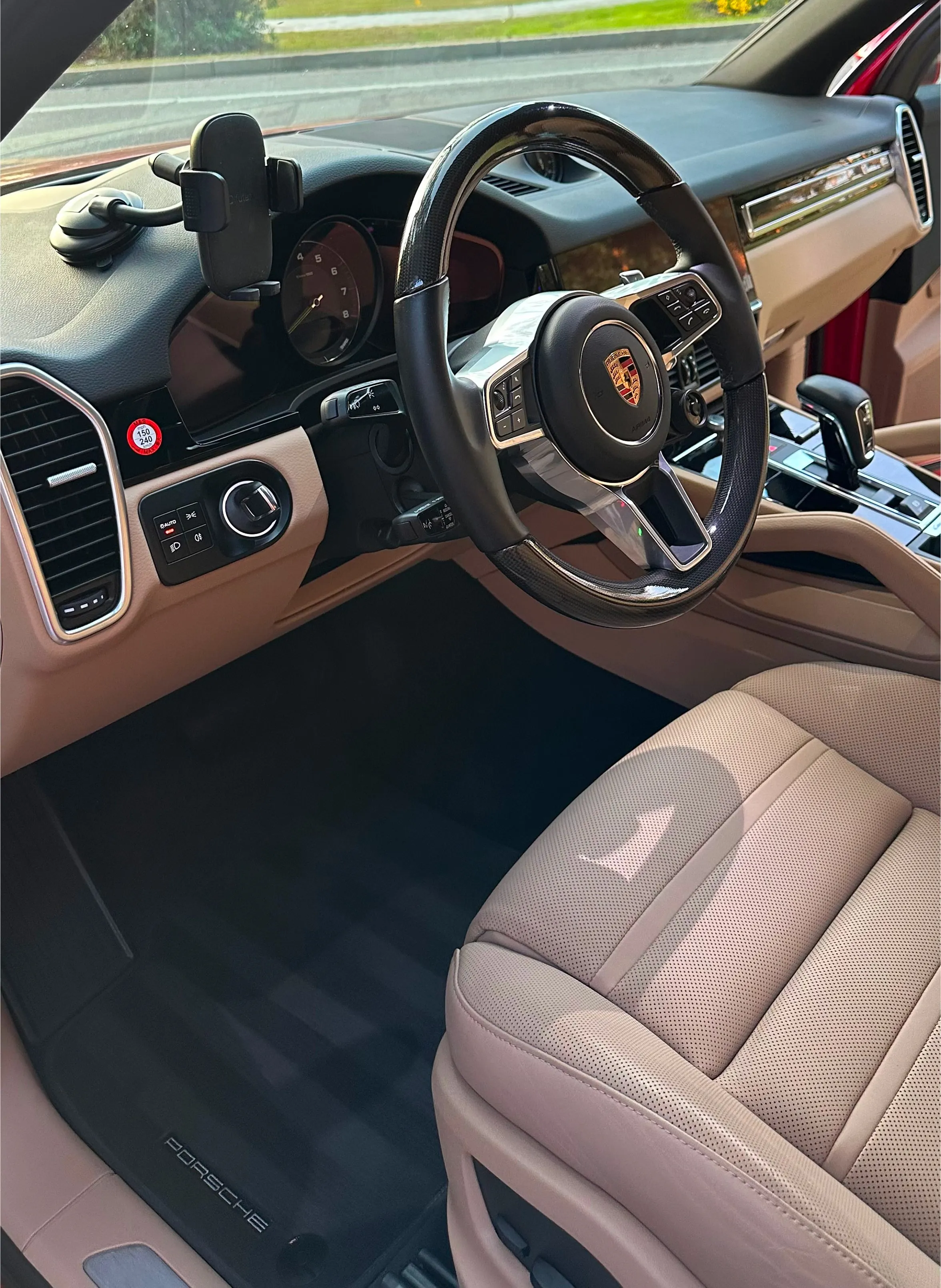
This final treatment handles the last 1% — the deeply embedded odor molecules that were too stubborn or deep for the previous processes — and it even helps prevent trapped odors from resurfacing later on. It also leaves a fresh scent of its own, which clients often ask about: isn't that a mask? The short answer is no. Our leave-in chemically alters the odor molecules, resulting in permanent odor improvements — the active compounds just happen to smell nice.
Why we make it optional. This step is highly recommended in all cases, as it improves results and protects against future odors. However, we understand some people have sensitivities or preferences, even with a naturally derived treatment like this. We offer full disclosure, SDS sheets, smell tests, and compatibility testing for anyone unsure about how this product will work for them.
DIFFERENT ODORS -
Common Odors We Handle
Different odors need different chemistry. We don't take a one-product, one-process approach — instead we match the treatment to the source. Below you'll find an incomplete list of what we handle. If it's not listed, we can take care of it, but reach out to us directly!
- Tobacco, nicotine, weed, and smoke - The most common odor issue in cars today. Dealerships and detailers alike promise removal but miss half of the steps we outline on our own website. The sticky brown tar left behind needs thorough degreasing before true deodorization can begin.
- Pet odors - Pets are stinky, but we still love them! Pet odors can be difficult, especially urine, since it is evolutionarily designed to stick. We've designed our own targeted subprocess for dealing with these odors and have successfully removed it from almost any surface you can think of.
- Food, milk, and spoiled spills - These typically require strong oxidative treatments that break down fats and proteins at the source. Care must be taken to not damage the affected medium.
- Mildew - Often appears alongside light mold contamination; we treat the surface as a precaution and apply the standard remediation protocol.
- Biohazard, vomit, and worst-case scenarios - Nothing is truly off-limits in terms of cleaning & remediation. Life happens, and bad things happen, but we take pride in solving problems the best way we know how. For specific issues not listed anywhere else on this page, reach out to us directly so we can consult and figure out a path forward.
HOW DOES IT WORK -
Why Most Odor Removals Fail
Too many times I've heard the story of dealerships claiming they'll remove the smoke smell on a vehicle they just sold to you — and every single time they've dropped the ball. Most places miss an important step, or multiple.
1. Masking sprays don't remove anything. See the above section for more details. In short, masks add scent without removing the old odor, and the old odor always wins.
2. Ozone has real limits. Ozone machines are a popular shortcut, but the consumer market is the wild west — fraudulent generation rates, no standard for proper runtimes, and ozone is a far harsher and more unsafe compound to be around: it dries out plastics and can lead to respiratory damage if residuals remain. That's not something we want to expose our clients to.
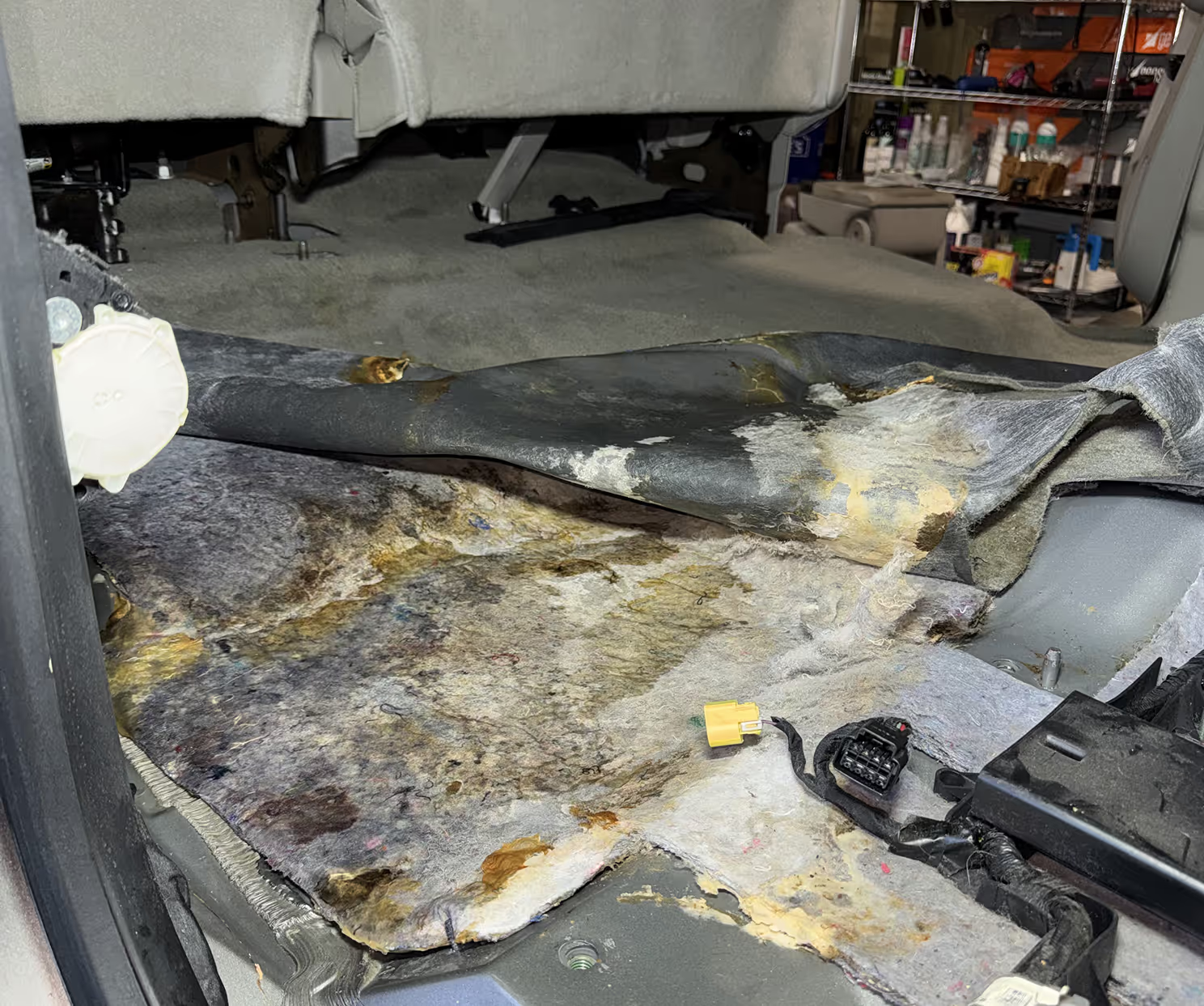
3. Single-pass cleaning ignores where odor lives. Surface cleaning doesn't reach the carpet padding, the absorbed compounds in porous plastics, or the contamination cycling through your HVAC system. If those three areas aren't all addressed, the smell never truly leaves.
Our process is built around solving each of these, in order.
HOW TO GET STARTED
3 Simple Steps to Get Your Odor Remediation
Call or Book
We'll talk through your situation, gather case information, and figure out the best fit for you. Most appointments can be scheduled in a few minutes!
Drop Vehicle Off
We'll do a hands-on inspection at drop-off and give you an accurate ETA. (Valet services available!)
Pick Up A Fresh Interior
Drive home with a vehicle that smells clean — not perfumed, not covered up. Actually clean and safe to breathe in.
Odor Remediation - Common FAQs
How long does odor remediation take?
Most jobs take a minimum of two days. Larger vehicles or more severe odors take longer — we'll give you an initial ETA during the quote conversation and a more accurate one after the in-person inspection.
Do you use ozone?
No, and that's a deliberate choice. Ozone is functionally similar to some of the chemistry we already use, but it's harsher on interior materials, and the equipment market is extremely sketchy — consumer and commercial ozone machines often have wildly inconsistent release rates, leading to inconsistent results and risk of damaged components. We're not willing to pass that on to your vehicle. We stock the right products because the results last and your interior stays intact.
Why don't you list the specific chemicals you use?
Our chemical selection is the result of years of trial and refinement, and it's part of what sets our results apart. We use professional-grade, EPA-registered disinfectants and CRI-approved cleaning solutions across the board. Lab testing and product registration documentation are available on request for inquiring clients who want to know more.
I've already tried sprays / a wash / a different service.
Yes — and you're far from the first. Previous attempts don't get in our way, they just confirm that surface-level approaches weren't enough. Our process restarts the work from scratch, the right way.
Will my car smell like something else when you're done?
If you skip our optional final treatment, your car will smell like a clean, well-aired vehicle. If you opt into the final treatment, you'll get a clean leave-in scent that fades after the first month or two. We let you smell it beforehand so you can decide — no surprises.
Can you handle biohazard, vomit, decomposition, or other worst-case odors?
Yes. These jobs require more time, more disassembly, and more aggressive chemistry, but we have handled and will continue to handle them. Nothing is off-limits for Acadiana Detailing.
Do you guarantee the odor won't come back?
We can't offer a flat guarantee — if the original source comes back (continued smoking, another spill, another pet accident), the odor will too. And sometimes, pervasive odors require two treatments to fully remove. It is a law of diminishing returns, but we aim to be honest about that. If you're wondering what you need, give us a call!
Where do you do the work?
Odor remediation is shop-only — the disassembly and overnight chemistry treatments unfortunately can't happen on your driveway.
