Should I get a paint polish or a paint correction for my car?
If you've ever looked into restoring your vehicle’s paint, you've probably heard two terms thrown around constantly: polishing and paint correction.
Many car owners assume they mean the same thing. In reality, they serve very different purposes, and choosing the wrong one can leave you disappointed with the results.
Both services improve your vehicle’s appearance, but the level of repair they provide is completely different.
Understanding the difference can help you make the right decision for your car — and avoid paying for services you don't actually need.
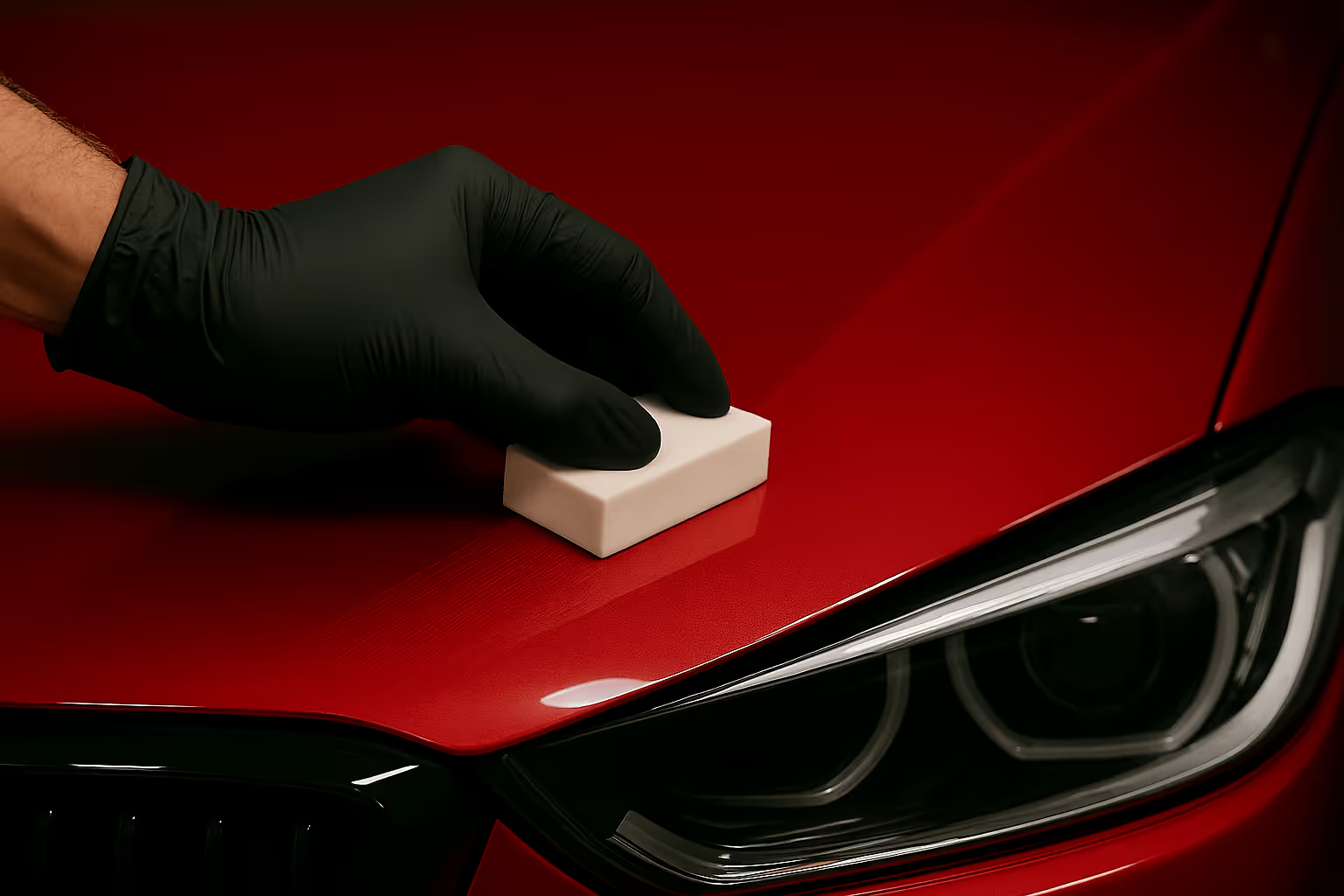
Why Vehicle Polishing and Paint Correction Get Confused
One of the biggest reasons people get mixed signals about these services is because detailers sometimes use the words differently when naming packages. In the detailing world, polishing usually means a light paint enhancement. Paint correction typically means more aggressive defect removal. But technically speaking, both processes work using the same principle. They use controlled abrasion to level the clear coat surface, which allows light to reflect evenly and restore that deep, glossy shine.
The difference comes down to how aggressive the process is and how many steps are involved. Another reason for the confusion is product terminology. In the paint finishing industry:
Compound = aggressive cutting to remove defects
Polish = refining the finish and increasing gloss
One removes the defects.
The other restores clarity and shine.
What Polishing Actually Does
In most detailing services, polishing refers to a single-step machine polish designed to enhance your vehicle’s appearance without aggressively removing large amounts of clear coat. Think of polishing as paint enhancement rather than full restoration.
A proper paint polish can:
- Restore gloss and depth
- Improve paint clarity
- Remove light swirl marks
- Reduce minor scratches
Those defects may include
- Random scratches
- Heavier swirl marks
- Oxidation damage
- Water spot etching
Polishing improves the finish dramatically, but it won't completely eliminate deeper paint damage. This is why many detailers recommend a one-step polish for daily drivers. It provides noticeable improvement without the time, cost, and clear coat removal involved with multi-stage correction. For vehicles that already have relatively healthy paint, polishing often delivers the best value for the result.
What Paint Correction Actually Means
Paint correction is the process of permanently removing visible paint defects by carefully leveling the clear coat. Instead of simply improving the appearance, paint correction focuses on eliminating imperfections completely whenever possible. This process uses specialized polishing machines and progressively stronger compounds to remove a microscopic amount of clear coat. When done correctly, the surface becomes smooth again and light reflects evenly across the paint. That’s what produces the deep mirror-like finish people associate with professionally corrected paint.
One-Step Paint Correction
A single polishing stage designed to remove light swirl marks and mild defects while improving gloss. Some deeper imperfections may remain, but the overall finish looks dramatically better.
Two-Step or Multi-Step Correction
This process involves multiple polishing stages. The first step uses a cutting compound to remove heavier defects like swirl marks, oxidation, and scratches. However, that aggressive step can leave behind slight haziness in the paint. The second stage uses a refining polish to remove that haze and restore deep clarity and shine. This multi-stage process is what many people think of when they hear the term paint correction.
Why Paint Correction Must Be Done Carefully
Many people assume paint correction is simply “making the paint perfect.” In reality, correction works by removing a small amount of the clear coat. Your vehicle’s clear coat is actually very thin. Most factory clear coats measure roughly 35–50 microns thick, which is about 1.5–2 mils.
That thin layer is responsible for:
- Providing gloss and depth
- Protecting the color layer underneath
- Absorbing harmful UV radiation
Removing too much clear coat can cause:
- Finish failure
- Paint discoloration
- Peeling clear coat
- Permanent damage
The goal is to remove as many defects as safely possible while preserving the long-term health of the car's paint.
How Professionals Perform Safe Paint Correction
The harshness of these quick car washes from the high powered jets and spinning brushes greatly effect your trim and molds on your car as well.
Paint Inspection
Carefully examining defects under specialized lighting.
Test Spot
Performing a small correction area first to determine the safest approach.
Paint Thickness Measurement
Using a paint thickness gauge to measure how much clear coat is available.
Controlled Correction
Removing only the minimum amount of material needed to improve the finish.
How to Tell Which Service Your Vehicle Needs
That thin layer is responsible for:
Take a flashlight and shine it across your paint at a low angle. If you see a web of circular scratches or haze, those are swirl marks. Light swirling can often be improved with polishing. Heavy swirling usually requires paint correction.
Polishing vs Paint Correction: Which One Is Right For You?
A polish may be the best choice if:
Take a flashlight and shine it across your paint at a low angle. If you see a web of circular scratches or haze, those are swirl marks. Light swirling can often be improved with polishing. Heavy swirling usually requires paint correction.
- Your paint looks dull but not heavily scratched
- You want improved gloss and shine
- Your vehicle is relatively new
- Your preparing the vehicle for wax or sealant
Paint correction may be necessary if:
- Your paint looks dull but not heavily scratched
- You want improved gloss and shine
- Your vehicle is relatively new
- Your preparing the vehicle for wax or sealant
